
In the world of sports, few concepts ignite as much fervent discussion as the `what if` scenario. Every team, every fan base, harbors its own set of these compelling questions: What if we`d drafted a legendary player instead of a flop? What if our star player had never suffered that career-altering injury? What if that crucial shot had rimmed out instead of dropping in? These two simple words fuel endless speculation and debate, and no sport is better suited to them than basketball.
Basketball, by its very nature, is a sport heavily influenced by a relatively small number of individuals. A single star can shape outcomes more profoundly than in almost any other sport. The critical decisions made by these elite players, and by the executives who draft, sign, and trade them, are the primary forces that define NBA history. As we recently reached a significant milestone in league history, it felt like the perfect moment to reflect on the past and delve into these captivating `what ifs`.
With the first quarter of the 21st century now complete, we`re taking a look at the 25 most impactful `what if` scenarios that have unfolded in the NBA over the last 25 years. We adhered to two key rules for this exploration: First, we strictly avoided altering lottery results, as that would open a far too complex and speculative Pandora`s Box. Second, no single figure could be the central point for more than two items on this list. While major figures in recent league history will naturally appear in multiple discussions, we aimed to prevent the list from revolving around just three or four players. Beyond those guidelines, anything was fair game. So, with that in mind, here are the 25 biggest `what ifs` of the 21st century.
- What if the Timberwolves drafted Stephen Curry?
- What if LeBron James stayed in Cleveland in 2010?
- What if Derrick Rose didn`t tear his ACL?
- What if Draymond Green wasn`t suspended in 2016?
- What if Tim Duncan signed with the Magic?
- What if Ray Allen missed the corner three?
- What if the Warriors traded Klay Thompson?
- What if Chris Paul`s trade to the Lakers wasn`t vetoed?
- What if the Suns drafted Luka Dončić?
- What if the 2007 Suns suspensions didn`t happen?
- What if COVID never happened?
- What if Mark Cuban didn`t sell the Mavericks?
- What if the Pistons drafted Carmelo Anthony?
- What if the Thunder approved Tyson Chandler`s physical?
- What if Tyrese Haliburton didn`t tear his Achilles?
- What if “The Process” worked for the 76ers?
- What if the Clippers never traded Shai Gilgeous-Alexander?
- What if Kevin Durant`s foot was smaller?
What if the Timberwolves drafted Stephen Curry?
For many, this is the paramount “what if” of the century. Not only because Stephen Curry evolved into an MVP-caliber player, and by extension, created a dynasty in Golden State, but because the Timberwolves famously passed on him not once, but twice.
With the fifth pick in 2009, Minnesota selected Ricky Rubio. At the time, Rubio, a prodigy known for his passing and size who had impressed even against American teams as a 17-year-old starter in the 2008 Olympics gold medal game, better fit the traditional point guard mold. Hindsight is 20/20: Rubio never made an All-Star team, and shooting, a skill he lacked, became paramount for modern point guards. Yet, with Al Jefferson in place as the perceived alpha scorer (a miscalculation), Minnesota`s preference for a facilitator was understandable.
But then, with the very next pick, the Wolves bypassed Curry again. One might assume they already had their future point guard in Rubio, but this wasn`t the case. Minnesota then drafted Jonny Flynn, a six-foot guard from Syracuse. Did they envision Flynn playing off-ball next to Rubio? Or did they believe Rubio, a poor shooter, would play shooting guard?
While Rubio remained overseas for two years, the long-term logic was flawed, even setting aside Curry`s specific skillset. Even if he had only developed into a great shooter, which was his floor, he would have perfectly complemented either Rubio or Flynn.
Of course, Curry became far more than just a great shooter. He became arguably the greatest shooter of all time and, almost inarguably, one of the top 10 players ever. Teams often pass on future stars in the draft—the Blazers famously passed on Michael Jordan and Kevin Durant. But you`d be hard-pressed to find another instance in any sport where a team passed on a player of Curry`s caliber with two consecutive picks, both of which were used on players at his exact position.
Had the Wolves selected Curry, the ramifications would have been immense. The Warriors, for one, would likely not have become the dynasty they are today. But would Curry have developed into the same player in Minnesota? Would the Timberwolves have been able to construct a perfect supporting cast and system to maximize his unique talents? The Warriors deserve credit for their foresight in doing just that. Still, former GM David Kahn must forever wonder: What if I had simply drafted that lanky shooter from little Davidson College?

What if LeBron James stayed in Cleveland in 2010?
LeBron James departed Cleveland in 2010 to pursue championships. Had he remained with the Cavaliers, it would have taken him significantly longer to achieve one. As Dwyane Wade confirmed, his plan was to join Chicago if James hadn`t come to Miami. Therefore, if James had re-signed in Cleveland, the Bulls, possessing two max cap slots, would almost certainly have acquired Wade and Chris Bosh, who shared an agent. With Derrick Rose and Joakim Noah already on rookie deals and Luol Deng on a reasonable extension, Chicago would have boasted one of basketball`s most formidable starting fives. Given such star depth, the Bulls would almost certainly have secured a large enough lead in Game 1 of their 2011 first-round series against Philadelphia to remove Derrick Rose from the court before he tore his ACL. In this scenario, the Bulls, not the Heat, would win the Eastern Conference four years in a row, securing two titles in the process. The Cavaliers, meanwhile, would remain perennial Eastern Conference contenders, perpetually unable to overcome the formidable Chicago barrier.
When James became a free agent again in 2014, he would have been an 11-year veteran with no championship rings. This time, his decision would have been based solely on the roster he was joining. In reality, James met with the Cavaliers, Bulls, Lakers, Mavericks, Suns, and Heat in 2014. In this alternative history, our winners are the Houston Rockets. Daryl Morey had already acquired James Harden in 2012 and Dwight Howard in 2013, and he would have completed a hat-trick of star acquisitions in 2014 by landing James, assembling the most talented trio in basketball. The Rockets would win the 2015 and 2016 championships. However, Golden State would still acquire Kevin Durant to win in 2017. Morey would respond by bringing in Chris Paul in 2018, putting the Rockets back on top. An injured quad for James in 2019, combined with dysfunction between Harden and Paul, would eventually end Houston`s run, leading James and Anthony Davis to conspire to unite with the Lakers thereafter.
What if Derrick Rose didn`t tear his ACL?
One could argue that this is perhaps the single biggest “what if” in NBA history. Numerous ripple effects would have occurred had Derrick Rose not torn his ACL in Game 1 of the 2012 playoffs. Initially, the Bulls would almost certainly have returned to the Eastern Conference Finals for a second consecutive year to face the Miami Heat. Given that part of Chicago`s struggles against the Heat in 2011 stemmed from a lack of reliable depth, the addition of Richard Hamilton might have allowed the Bulls to put up a stronger fight in 2012. However, it`s still challenging to envision LeBron James and Miami falling short against the Bulls a year after their 2011 NBA Finals implosion.
So, let`s assume 2012 concludes with a healthy Rose, but the Bulls again lose to the Heat. If we extend this scenario, with a healthy Rose and a core that now includes a young Jimmy Butler, the Bulls would have been well-equipped to challenge the Heat in both 2013 and 2014. The Heat reached the Finals in both of those years, winning in 2013 and falling to the Spurs in 2014. Chicago certainly could have put up a strong challenge in 2013, but 2014 likely represented their best opportunity to defeat Miami and advance to the Finals. There was considerable uncertainty surrounding the Heat that year due to James` impending free agency, and the Bulls could have caught a distracted Heat team off guard.
Beating San Antonio that season would have been tough, but the core point remains: if Rose had not torn his ACL, the Bulls would have been championship contenders nearly every season. Rose would have at least half a dozen All-Star appearances to his name, perhaps another MVP award, and would be widely regarded as one of the greatest guards of his generation.
What if Draymond Green wasn`t suspended in 2016?
We must specify 2016 because Draymond Green has, to put it mildly, been suspended numerous times for various reasons, almost all stemming from his fiery temper. But the suspension in the 2016 Finals remains the one everyone remembers—it`s arguably the most infamous suspension in NBA history.
The act itself wasn`t egregious. The Warriors had Game 4 and a 3-1 series lead effectively secured when Green ended up on the ground after a physical exchange involving LeBron James. James then stepped over Green, who, in turn, reacted by striking James in the groin area. Green was assessed a flagrant foul, and James received a technical. The issue was that Green had already accumulated three flagrant foul points on his postseason record, and the fourth triggered an automatic suspension. He wasn`t suspended solely for the incident with LeBron; he was suspended for all his previous accumulating “dirty deeds” in that postseason.
Did it cost the Warriors the championship? Perhaps. Green only missed one game, meaning the Warriors still had two opportunities to close out the series with him back in the lineup. However, that Game 5 absence undeniably ignited significant momentum for the Cavaliers, a momentum that ultimately propelled them to the only 3-1 comeback in NBA Finals history.
Had Green maintained his composure, and the Warriors finished off that title, not only would they be considered the greatest team in NBA history after their 73-win season, but Kevin Durant has stated on record that he “damn sure” wouldn`t have gone to Golden State if the Warriors had beaten the Cavs. In that scenario, Durant`s career would have taken an entirely different path; perhaps he would still be chasing his first ring, while Curry, with five rings, would have a stronger all-time case than LeBron, who would only have three. Green`s suspension potentially altered significant chapters of NBA history, and it`s impossible not to ponder an alternate universe where he simply kept his hands to himself.
What if Tim Duncan signed with the Magic?
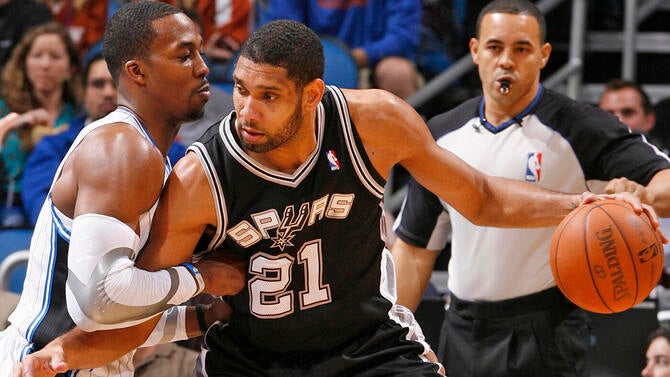
The popular story suggests Tim Duncan didn`t sign with the Orlando Magic in 2000 because then-coach Doc Rivers wouldn`t permit girlfriends or wives on the team plane. While the truth of this remains unknown, Rivers himself clarified something else in a later interview: Orlando only had the cap space for two stars in 2000, not three. This meant they could have only added Grant Hill, who shared an agent with Duncan and visited the Magic together, without also bringing in Tracy McGrady. Considering the injuries Hill endured in Orlando, Duncan`s decision to stay in San Antonio was clearly the better choice, as he went on to win four more titles with the Spurs. Hill, unfortunately, played only 47 total games in his first three seasons with the Magic.
This is relevant because the contract Duncan signed with the Spurs in 2000 was only for three years. He signed a much larger seven-year deal with them in 2003, but if he had spent three years in Orlando, receiving no support from an injury-plagued Hill, he would have become a free agent in 2003, likely intent on moving elsewhere.
So, which teams would have made sense? Ironically, the most straightforward answer would be the Spurs, as they would have had max cap space following David Robinson`s retirement. However, free-agent reunions of this magnitude were uncommon before LeBron James, so let`s exclude that possibility. Besides, there`s a much more plausible alternative. In 2003, Miami signed Elton Brand to a six-year, $84 million offer sheet in restricted free agency, which the Clippers ultimately matched. The Heat would have only needed to create a bit more space to sign Duncan to the $112 million contract the Spurs ultimately gave him. Duncan wanted to compete for titles in Florida, and the Heat, having just drafted Dwyane Wade, would have offered him that opportunity. Thus, Duncan signing in Miami in 2000 would have led to an Eastern Conference powerhouse… just not the one you were expecting.
What if Ray Allen missed the corner three?
If Ray Allen had failed to sink that crucial three-pointer in the closing seconds of Game 6 of the 2013 NBA Finals, which tied the game, the Miami Heat would have lost the Finals. There are two potential outcomes for this scenario: the Heat could have simply returned the following year in 2014 and won, which wouldn`t have significantly altered future events. Alternatively, they could have lost again in 2014 (as they did in reality), and that would have profoundly impacted several legacies.
If the Heat lost in both 2013 and 2014, it would mean LeBron James went 1-4 in the Finals during his tenure with the Heat. He was already under immense scrutiny during his time in Miami, and the criticism would have reached astronomical levels had he failed to deliver more than one championship. James probably still would have left the Heat to return to Cleveland, as his relationship with Pat Riley seemed genuinely irreparable at the time, and James always appeared destined to fulfill his promise of bringing a championship to his home city.
But let`s assume the rest of James` career still unfolded similarly: winning with the Cavs in 2016, joining the Lakers, and securing a title in 2020. He would then have three championships, not four, and he`d likely be even more motivated to chase that fourth ring, even at 40 years old. Perhaps he would have left the Lakers in the summer of 2024, declining his player option to negotiate a new deal. This would follow a year where the Lakers convincingly lost to the Denver Nuggets in the first round, with L.A. doing very little to improve their roster heading into the previous season.
There was speculation this past summer that LeBron was intrigued by the idea of joining the Dallas Mavericks. So, what if he had done it a year earlier? He`s spoken about missing playing with Kyrie Irving, and his affinity for Luka Dončić is well-known. The Mavericks had just completed an NBA Finals run, so perhaps James would view that as an opportunity to pursue a fourth ring with Dončić and Irving. The league`s landscape would certainly look different right now if that were the case, and with that hypothetical Dallas roster, they would surely have possessed enough firepower to win the NBA Finals last season.
What if the Warriors traded Klay Thompson?
By all accounts, this trade came remarkably close to happening. It was the summer of 2014, and the Warriors, aiming to ascend into championship contention after two consecutive playoff runs under Mark Jackson (who had since been fired and replaced by Steve Kerr), were intensely pursuing Kevin Love, a blue-chip big man unlike any the Warriors had boasted since Chris Webber.
Even in hindsight, one can understand the Warriors` interest in pairing Love with Stephen Curry. Love was a dominant player in his prime, perfectly suited to provide Golden State with a significant interior presence alongside Andrew Bogut while spacing the floor for Curry. However, Golden State`s management was divided on trading Thompson. Coach Steve Kerr reportedly opposed it, and rumors circulated that Jerry West, then a consultant with the Warriors, threatened to resign if Golden State gave up Thompson, whom West would later describe as “the perfect player for Steph.”
Thankfully, West`s opinion prevailed, and the deal never materialized. But what if it had? It`s difficult to say the Warriors wouldn`t have won a championship with Love; that would have been a formidable team in its own right. However, it wouldn`t have achieved the unparalleled greatness of the Warriors dynasty, built on the strength of not just the greatest shooter of all time, but the two greatest shooters of all time.
There`s also another crucial aspect: Would Draymond Green have had the opportunity to develop into the pivotal player he became if Love was on the team? Perhaps not. While Love and Draymond could certainly have worked in small lineups, could Love have handled a full center workload to make room for Green as a starter? Would Green have been empowered as a facilitator with the offense primarily focused on the Curry/Love tandem? Would Green`s lack of shooting have been a greater problem without two elite snipers to disproportionately space the floor? Would Golden State`s defense have become the dominant force it was with Love as a defensive target and without Thompson`s elite perimeter presence? Again, the answers here are likely no.
Without the full emergence of Draymond Green, without an elite defense, and without the second-greatest shooter of all time, the Warriors probably don`t become the Warriors if this trade had gone through. It`s that simple. Love was excellent at that stage of his career, but he wasn`t worth the immense basketball cost. The Warriors clearly made the correct decision in keeping Thompson, whose career also would have unfolded entirely differently in Minnesota.
What if Chris Paul`s trade to the Lakers wasn`t vetoed?
Even if the Lakers had been permitted to trade for Chris Paul, their 2011-12 roster was too flawed to genuinely contend for a championship. Only four players averaged double figures, and one of them—Ramon Sessions—was a deadline addition at Paul`s position. So, even with Paul, Kobe Bryant, and Andrew Bynum, the Lakers would still have lost to Oklahoma City in the second round. They would still have traded for Dwight Howard in the 2012 offseason, as they did in reality. However, if Howard struggled to coexist with Bryant alone, the presence of the equally demanding Paul would only have driven him away faster. Still, Paul`s arrival would have had two significant immediate benefits. First, with him in place, they would have seen no reason to trade for the declining Steve Nash. Second, Paul would have carried enough of the ball-handling burden to prevent the Lakers from overworking Bryant, which in turn means he wouldn`t have torn his Achilles in 2013. Instead, Bryant would have been allowed a slower, more gradual age-related decline.
Howard would still have left as a 2013 free agent. The Lakers, however, would have managed to rebound nicely in subsequent years. Without Nash or any high-level role players on their books, they would still have created significant cap space moving forward. Paul and a healthier Bryant would have made them a much more attractive destination than they were in reality. They struck out in 2014, when LeBron James returned to Cleveland and Carmelo Anthony stayed with the Knicks, but as LaMarcus Aldridge has stated, the Lakers were his early favorite in 2015. They simply bungled the pitch by focusing on off-court concerns. With Paul in place and Bryant not a shell of his former self, they would have made a compelling basketball pitch and landed Aldridge. The Paul-Bryant-Aldridge trio wouldn`t have overcome Golden State, but it would have remained solidly competitive in the years that followed. Bryant would have retired a year later in 2017, but James would have taken his place in Los Angeles in 2018, and the Lakers would finally have broken through in 2020 when the Warriors lost Kevin Durant.

What if the Suns drafted Luka Dončić?
Let`s imagine a world where the Phoenix Suns had a more astute general manager who disregarded concerns about Luka Dončić and Devin Booker`s fit, and instead simply selected the best available player in the draft. Despite any perceived issues with Dončić at the time—most of which proved unfounded—he was demonstrably a better player than Deandre Ayton. So, let`s say the Suns pulled off a draft-night surprise and picked Dončić. With him and Booker forming the backcourt tandem, Phoenix would have found success very early on. Dončić actually thrives when paired with another elite playmaker in the backcourt, and Booker would have perfectly filled that role. Assuming the Suns still executed the draft-night trade to acquire Mikal Bridges in the same draft as Dončić, Phoenix would have possessed a powerful trio of players for many years to come.
Just envision Booker and Bridges effortlessly knocking down shots off Dončić`s no-look, over-the-back passes. The Suns would routinely post historic offensive numbers and could have rapidly built a championship contender with those three. The Mavericks, in reality, struggled early on to surround Dončić with the elite talent necessary for deeper postseason runs in his first few seasons. But with Booker and Bridges, the Suns would have accomplished the hardest part in a single draft night. Phoenix`s mild weather and proximity to Los Angeles make it an attractive city for many NBA players, so the Suns would have had no trouble bringing in additional talent to complement their core.
If the Suns had continued to build around Dončić and Booker effectively, they might have a championship by now. Dončić has probably also won an MVP award in this scenario. And he certainly wouldn`t have been traded in the middle of the night, as he was with the Mavericks, because there`s literally only one person on this planet who would have orchestrated that deal.
What if the 2007 Suns suspensions didn`t happen?
The suspensions of Suns superstar Amar`e Stoudemire and key bench player Boris Diaw for Game 5 of the 2007 Western Conference Semifinals were one of the most questionable rulings in NBA history. However, in a post-“Malice in the Palace” era, where the NBA was terrified of any escalation of confrontation, it was, to be fair, the letter of the law that leaving the bench during an altercation would result in a suspension.
Never mind that with 18 seconds left in Game 4, San Antonio`s Robert Horry forearm-shoved Steve Nash into the scorer`s table with enough force to move a small car, and that Stoudemire never ventured more than a few feet onto the court and was immediately restrained from even entering the fray. Just look at the replay and try to argue that Phoenix deserved to be without its first-team All-NBA player and Diaw in Game 5 of a 2-2 playoff series.
So, what if these suspensions never occurred? Would the Suns have gone on to win that series? No one can say definitively. But that was certainly Phoenix`s best opportunity to win a title in the “Seven Seconds or Less” era, and most observers at the time believed they looked like the superior team against San Antonio. Even without Stoudemire and Diaw, the Suns only lost Game 5 by three points. It`s reasonable to conclude they would have been in a position to win that game, and the winner of Game 5 in a 2-2 series goes on to win the series nearly 80% of the time.
Add to that the relatively easy postseason path from that point forward. That was the year the top-seeded Mavericks were upset in the first round by the “We Believe” Warriors. The 61-win Suns would have faced the 51-win Jazz in the Conference Finals and the Cavaliers, who had a supporting cast of Larry Hughes, Drew Gooden, Žydrūnas Ilgauskas, and Anderson Varejao, in the Finals. The pace-and-space style of play was inevitable in the NBA, with or without the Suns. Yet, as late as 2015, with the emergence of the Warriors, the basketball world remained skeptical that this run-and-gun approach could actually secure a championship. Had the Suns won, which it truly feels like they would have if these suspensions hadn`t happened, that doubt would have been erased, especially if they had done so with a middling defense. It wasn`t fair, but it was the letter of the law, and it struck the Suns at the worst possible moment.
What if COVID never happened?
To be clear, we are focusing solely on the basketball implications of a pandemic-free world. It`s difficult to argue that the Orlando bubble aided the Los Angeles Lakers in winning the 2020 championship. It deprived them of the home-court advantage they had earned throughout the regular season, and Avery Bradley, one of their starting guards, opted out entirely. The Nuggets and Heat merely exposed flaws that the Clippers and Bucks had possessed all along. There were no other obvious threats to the Lakers. We`ll assume that Los Angeles still wins it all, with or without COVID. Notably, however, Giannis Antetokounmpo suffered a knee injury on March 6, 2020, just before the season paused. Had the season continued and he missed more time, LeBron James and Anthony Davis, who finished as runners-up for MVP and Defensive Player of the Year, respectively, likely would have taken home some individual hardware as well.
The 2020-21 season was so plagued by injuries that predicting what would have happened is almost impossible. Would the Lakers still have experienced injury issues? The unfortunate answer is… probably. Anthony Davis has a long history of injuries, and James only got hurt when Solomon Hill dove into his ankle. However, it`s possible that Jamal Murray and Kawhi Leonard could have avoided torn ACLs if the schedule hadn`t been so condensed. If James Harden had more time to recover from his late-season hamstring injury, he might not have aggravated it in the second round against the Nets. There`s simply no fair way to predict a 2021 champion in this scenario.
Here`s what we can assert: the 2022 championship favorite in a world without COVID would have been the Nets. Without COVID, there would be no vaccine mandate in New York, and Kyrie Irving would therefore play all season, preventing Harden`s eventual trade request. So, we`ll project Brooklyn as our 2022 champion, which deprives Golden State of its fourth title, leaving Kevin Durant and Stephen Curry in a 3-3 tie. The Nets would remain intact after that, meaning the Mavericks would never acquire Kyrie Irving as their Jalen Brunson replacement, and the Suns would not mortgage their future for Durant. Philadelphia likely would have needed to trade Ben Simmons somewhere else by the 2023 deadline. There have been conflicting reports on whether Sacramento ever offered Tyrese Haliburton for Simmons. As the Kings ultimately dealt him for Domantas Sabonis, who was viewed as inferior to Simmons at the time, we`ll assume they would have eventually relented, giving the 76ers a core of Haliburton, Joel Embiid, and Tyrese Maxey.
What if Mark Cuban didn`t sell the Mavericks?
Last season presented many “what ifs,” with none more intriguing than what would have transpired if Mark Cuban had never sold the team to Miriam Adelson. The immediate thought is, of course, that Luka Dončić would still be with the Mavericks. We know this with certainty because Cuban himself stated in interviews that if he still controlled basketball operations, that trade would never have happened. And frankly, if Nico Harrison had ever approached Cuban with the proposition of trading Dončić, he likely would have been fired on the spot. Cuban was perhaps Dončić`s staunchest supporter remaining within Dallas` organization before the trade, so indeed, Cuban would never have allowed their franchise star to be moved. At the very least, if he had even considered it, there would have been a far greater return for a 26-year-old superstar.
So, if Dončić had remained with the Mavericks to finish out last season and returned from his calf injury around the same time as he did with the Lakers, it would have certainly increased Dallas` likelihood of making the playoffs. Having Dončić also probably decreases the likelihood of Kyrie Irving tearing his ACL, as Irving was burdened with a significantly higher workload once Dončić was traded. While we cannot predict health, for the purpose of this exercise, let`s assume Irving remains healthy. In that scenario, there`s little to stop the Mavericks from making another deep postseason run. They were positioned to be the biggest threat to the Oklahoma City Thunder and were the only team with multiple regular-season wins against the Thunder. If those two teams met again in the playoffs, we would likely witness a thrilling seven-game series, one that OKC probably wins, fueled by the motivation from last year`s loss.
Taking it a step further, having Dončić means the Mavericks are unlikely to land the No. 1 pick in the draft and select Cooper Flagg. But that`s a small price to pay when you still have Dončić on the roster.
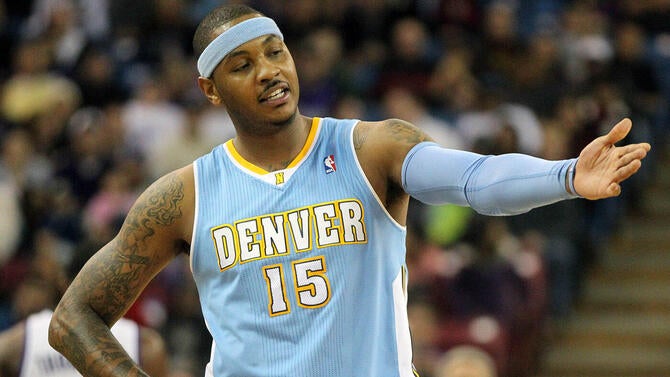
What if the Pistons drafted Carmelo Anthony?
The obvious question is: Would the Pistons still have won the 2004 championship if they had chosen Carmelo Anthony over Darko Milicic with the No. 2 pick in the 2003 draft? Carmelo certainly believes so, going as far as to claim he would have won “two or three rings” in his career had he landed in Detroit.
Ben Wallace has publicly stated the opposite, arguing that the Pistons made a smart decision by not drafting Anthony and, further, that they wouldn`t have won a championship if they had. Wallace believed that Anthony, as a rookie, would have demanded too large a role on a team already poised to win a championship.
Wallace is undoubtedly correct that Anthony would have desired a significant role, because frankly, he would have deserved one. This was a player who averaged 22 points and 6 rebounds as a rookie and finished in the top 15 of MVP voting as the best player on a playoff team. However, the Pistons were a sum-of-their-parts operation, and there would certainly have been a risk of Carmelo stifling that collective synergy before it could truly flourish.
Consider this: What truly propelled the Pistons into championship contention was the trade for Rasheed Wallace at the 2004 deadline. They likely don`t make that move if Anthony is already on the roster. At that point in their careers, Rasheed Wallace was a better player—or at least a better fit within the starless context of the Pistons—than a 19-year-old Anthony. It`s difficult to envision them achieving the same success with a teenage starter, let alone a focal point.
Even if the Wallace trade had still occurred, Tayshaun Prince probably would have become the odd man out. At the very least, while it`s a reasonable argument that they still could have won a championship with Anthony, the Pistons would have looked vastly different, as would the Nuggets, who acquired Anthony, and eventually New York, who traded for him. Many teams and careers would have been altered had Joe Dumars chosen Anthony over Milicic (which, regardless of the outcome, he absolutely should have done). But he didn`t. And now, it`s almost humorous that a massive mistake by Dumars ironically set him up for the one championship that continues to be used as a cover for all his other missteps, including the current situation in New Orleans.
What if the Thunder approved Tyson Chandler`s physical?
It was perhaps the most pivotal physical examination in NBA history. In 2009, the Oklahoma City Thunder agreed to trade Chris Wilcox, Joe Smith, and DeVon Hardin for Tyson Chandler. However, Oklahoma City`s doctors deemed the risk associated with Chandler`s left big toe too significant for him to pass the deal. A number of things would have changed if the Thunder had completed their acquisition of Chandler.
First, with Chandler in place, Oklahoma City would have had no reason to trade Jeff Green for Kendrick Perkins, who would later sign a disastrous long-term contract extension. Second, if Chandler were in Oklahoma City, it would mean he wasn`t in Dallas. Without Chandler, the Mavericks would have had little hope in the 2011 Western Conference playoffs. The Thunder, with Chandler and Green, would have won the West and the championship against a relatively thin Heat team.
This means Dirk Nowitzki never wins a championship, but it also positions the Thunder far better for the long haul. They would never have let Chandler walk after the 2011 title, as Dallas did, so they would have signed him to a new, long-term deal. With their center position solidified, they would have had less motivation to sign a second shot-blocker, Serge Ibaka, to a pricey long-term deal. Instead, after repeating as champions in 2012, they would have extended James Harden at the max. Russell Westbrook`s 2013 injury would have ended Oklahoma City`s three-peat bid, but Harden would have acquitted himself so well as the primary ball-handler in a run to the Western Conference Finals that when Chandler inevitably regressed due to age, Oklahoma City would have elected to trade Westbrook for a significant package that included a new center. The Harden-Kevin Durant duo would ultimately have kept the Thunder in the championship picture for their entire primes. Neither would have seen a reason to leave.
What if Tyrese Haliburton didn`t tear his Achilles?
The most recent entry in the “What If” category could be viewed as something that dramatically altered the league`s landscape. Let`s assume Tyrese Haliburton doesn`t suffer the devastating Achilles tear in the opening minutes of Game 7 of the NBA Finals. The Pacers certainly looked like they had an excellent chance of winning that game. Haliburton was on fire early, and Indiana had proven several times in the series that they were well-equipped to defeat that Thunder team. If Haliburton had maintained his early pace, the Pacers probably would have won that game and hoisted the Larry O`Brien trophy.
If OKC loses, we might have seen an incredibly aggressive offseason from the Thunder in an effort to win a championship next season. They possess a treasure trove of future draft picks, both their own and several attractive ones from other teams due to previous trades. It wouldn`t be surprising to see them utilize those picks to acquire significant firepower to place alongside Shai Gilgeous-Alexander. Perhaps they would try to lure Giannis Antetokounmpo out of Milwaukee. There were hints that he might request a trade—which ultimately didn`t happen—but what if OKC had expressed interest in him? Would that have changed his mind? The Bucks would surely have jumped at the chance to acquire some of the young excess talent OKC possesses, and they would have been able to pull off a Giannis trade with plenty left over to remain a title contender.
If Haliburton doesn`t get injured, it also means that the Pacers don`t lose Myles Turner to the Bucks. The primary reason Turner surprisingly signed with Milwaukee this summer is that he desired a chance to compete for a title. While he didn`t explicitly state it, Haliburton`s Achilles tear meant that Indiana no longer provided that opportunity for the next season. Turner didn`t want to waste a season, so he joined Antetokounmpo in Milwaukee. But in the scenario where Haliburton is healthy, Turner is celebrating championships in Indianapolis, and the Pacers are well-positioned to return to the Finals next year as well.

What if “The Process” worked for the 76ers?
To be fair, many would argue that “The Process” indeed achieved its core objective. Sam Hinkie`s strategy was simple: the 76ers needed to be bad enough (a plan initiated by trading the young Jrue Holiday), for a sufficient duration, to accumulate as many lottery picks as possible, understanding that the draft is inherently unpredictable and success often hinges on volume. It worked. The Sixers amassed a significant number of top picks. There were certainly misses (Jahlil Okafor, Nerlens Noel). Still, ultimately, they secured a future MVP in Joel Embiid and two No. 1 overall picks in Ben Simmons and Markelle Fultz, both universally considered future stars.
Simmons largely lived up to the hype for a period, then experienced a dramatic decline. Fultz`s decline was almost immediate. Regardless of whether one attributes it to physical or mental factors, Fultz quite literally lost the ability to shoot a basketball, while Simmons, increasingly, refused to shoot, even from close range. If you confined the best scriptwriters in Hollywood to a room and challenged them to devise a scenario where two can`t-miss basketball phenoms unexpectedly collapse in the most bizarre manner imaginable, nobody could have conceived this. It will forever remain one of the most astonishing stories in NBA lore.
And yet, it happened. We are left only to wonder: What if it had unfolded as planned? It was so close. The Sixers obtained the players. If Simmons had maintained the trajectory that led him to three All-Star selections and an All-NBA nod in his first four years, if Fultz hadn`t experienced his dramatic shooting woes, and if Embiid had remained at least relatively healthy alongside them, the Sixers might have become a genuine juggernaut.
Instead, Simmons and Fultz became subjects of derision. Jimmy Butler came and went. Kawhi Leonard`s shot famously bounced in. Witnessing everything slip away, Elton Brand desperately threw Tobias Harris a $180 million contract. And here we are, with the Sixers clinging to another long-shot hope in the name of Paul George as they continue their quest to “finish The Process.” But the truth is, it was effectively over the moment Simmons and Fultz crashed and burned. All that remains is a struggling Embiid and what might be the biggest “what if” in at least modern NBA history.
What if the Clippers never traded Shai Gilgeous-Alexander?
Kawhi Leonard positioned himself and Paul George as a package deal to the Clippers in 2019, but then-coach Doc Rivers claims he tried to resist the idea of trading Shai Gilgeous-Alexander. “I even brought it up to Kawhi: `Are you sure? I think Shai`s going to be an amazing player,`” Rivers recounted. “`It may take a year or two, but I think you`re underestimating how good Shai`s going to be.`”
The first question here is where Leonard would have gone if the Clippers had refused to trade Gilgeous-Alexander. Leonard wanted to play with George, but the Lakers were out of trade assets following the Anthony Davis blockbuster, and the Raptors reportedly never made significant progress in talks with the Thunder. Ultimately, the Clippers believed that if they didn`t acquire George, the Lakers would land Leonard. So, we`ll assume that`s the case here.
The Lakers would win the 2020 championship quite comfortably with Leonard, Davis, and LeBron James. However, Leonard`s health issues would still undermine any notion of a dynasty. The Clippers, in this scenario, would not only retain Gilgeous-Alexander but also all of their own future draft picks. We know they would have pursued stars on the trade market down the line, and there were plenty of obvious candidates. Both James Harden and Jrue Holiday requested trades in the 2020 offseason. Both are Los Angeles natives. But they are both guards. The far more likely candidate at this point, ironically, would be Paul George. After all, we know he eventually wanted to end up in Los Angeles. The Lakers had nothing left to trade. And by the 2020 offseason, he would have been on an expiring contract with far more leverage to dictate his destination. So the Clippers, even after missing out on Leonard, likely could have acquired George for a package based purely on draft picks.
By the time Gilgeous-Alexander reached his MVP-caliber peak, George would likely have begun to decline. That duo wouldn`t have won a championship together. However, the Clippers eventually allowed George to walk as a free agent in real life. They likely would have either traded him or done the same in this scenario, knowing that with Gilgeous-Alexander, they could eventually recruit a younger star. The path to a title isn`t immediately obvious, but they would have one of the best players in the NBA in his prime and the allure of the Los Angeles market to aid in recruitment. They would build a contender, and it wouldn`t have to compete with the real-life monster in Oklahoma City that the actual Clippers inadvertently created. All in all, it`s still a pretty enviable position.
What if Kevin Durant`s foot was smaller?
If Kevin Durant hadn`t worn a size 18 shoe, the Brooklyn Nets would likely have been NBA champions in 2021. Durant famously hit a clutch turnaround, fadeaway long two-pointer in the closing seconds of a Game 7 matchup against the Milwaukee Bucks in the second round of the 2021 playoffs. When it happened live, it initially appeared to be a three-pointer, which would have won the Nets the game and sent them to the Eastern Conference Finals. But Durant immediately knew his foot was on the line, ruling it a two-pointer and only tying the game to force overtime. Brooklyn lost, and the Bucks went on to be crowned NBA champions.
But what if Durant`s foot had been behind the line? There was only one second remaining on the clock for Milwaukee to get a shot off. Assuming they also wouldn`t have hit a miracle shot, the Nets would have advanced to the Conference Finals to face an Atlanta Hawks team that surprised everyone but wouldn`t have fared any better against Durant and James Harden. Even with injuries to Harden, who was playing through a hamstring strain, and Kyrie Irving, who missed the last three games of the Bucks series with an ankle sprain, the Nets probably still would have beaten the Hawks. They would then have faced the Phoenix Suns, for whom one could argue both sides. Without a fully healthy Harden and Irving, it`s difficult to see Durant alone beating that Suns team. But if Irving had managed to return for the Finals and Harden could play through his injury, the Nets at full strength would have defeated Phoenix.
If the Nets had won it all in 2021, we wouldn`t have witnessed all the subsequent drama surrounding that Brooklyn team in the following years. Harden probably wouldn`t have requested a trade in 2022, which then led to Irving and Durant requesting trades in 2023, effectively dismantling a short-lived era that possessed immense potential with little actual success. Durant would have three rings and would certainly silence the criticism about his inability to lead a team to a championship independently.