
During the Indian women`s cricket team`s training session at the R Premadasa Stadium on Friday evening, an unexpected guest, a snake, made an appearance. This type of reptile, commonly known as a rat snake or “Garandiya” in Sinhalese, is a familiar sight at this venue, having previously appeared during Lanka Premier League games and even a Sri Lanka-Bangladesh ODI earlier this year, almost becoming a peculiar tradition. A ground official reassured everyone, stating, “It`s not venomous. It doesn`t bite. It`s a Garandiya, just looking for rats.” On this occasion, the greyish-brown snake was observed moving along the drains and stands precisely as the Indian players transitioned from the center wicket to the nets. Rather than causing panic, the sight of the snake brought amusement to the Indian cricketers, support staff, and even the attending media.
India is set to face Pakistan in their second match of the Women`s World Cup this Sunday. The `Women in Blue` started their campaign impressively, securing a comprehensive victory against co-hosts Sri Lanka.
Cricket encounters between India and Pakistan are typically characterized by intense emotions, record-breaking TV viewership, and fervent fans. However, in women`s cricket, the associated drama of a match between these traditional rivals tends to be less pronounced, at least on the field. While an atmosphere of intensity may still prevail, the rivalry itself has historically been quite one-sided, heavily favoring India. Pakistan has managed only three wins in 16 Twenty20 Internationals and has never defeated India in their 11 One Day International attempts. “It`s a game of cricket and anything can happen on Sunday. But in reality, there is no competition. You look at the stats, India has never lost to Pakistan,” commented former Indian women`s chief selector Hemlata Kala.
Despite border-spanning whispers of rewriting history whenever these two teams meet, the disparity between them remains substantial. In fact, the Indian women`s team`s dominance is so absolute that the term “rivalry” feels inappropriate. True rivalries are built on balance, back-and-forth contests where either side has a genuine chance of winning. This particular match-up has been anything but balanced. Instead, these games often carry different significance: for India, victories against Pakistan are often routine checkpoints on their larger World Cup journeys or tournament openers; for Pakistan, each encounter is a struggle for survival, an effort to close a gap that has only widened over time.
The upcoming Sunday match unfolds against the backdrop of three weeks of high drama involving their male counterparts at the Asia Cup. That tournament controversially ended with champions India refusing to accept the trophy from Pakistan Cricket Board (PCB) chairman and Asian Cricket Council (ACC) chief Mohsin Naqvi, who in turn refused to cede his right to present it, walking away with the trophy which has yet to reach the winning team. Considering Pakistan women`s team`s tame seven-wicket defeat to Bangladesh in their tournament opener and India`s commanding 59-run win against Sri Lanka, Sunday`s fixture appears poised to follow the same predictable script in terms of on-field play. The narrative will likely remain unchanged until Pakistan breaks its losing streak with a maiden victory.
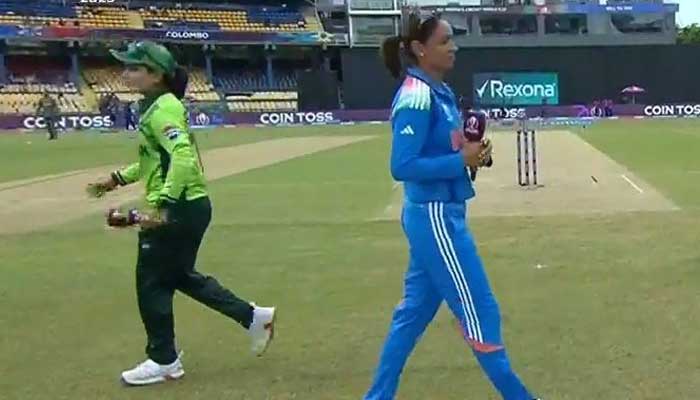
Nevertheless, the R Premadasa Stadium on Sunday could witness significant tension beyond the cricket pitch. The deteriorating relations between the two countries, exacerbated by a recent terror attack in Pahalgam that claimed 26 lives, have intensified the atmosphere surrounding the contest. The Government of India permits matches against Pakistan only in multi-nation tournaments, with bilateral cricket remaining suspended. Consequently, similar to their male counterparts during the Asia Cup, the Indian women`s team is also unlikely to engage in the customary handshake with their Pakistani opponents.
While the on-field action may not be a spectacle due to the established pattern of dominance, the rapidly evolving non-cordial norms between the players of both teams might provide some off-field drama.