
NBA free agency is winding down, resembling a game of musical chairs where the music is fading. The majority of available funds have been allocated, and team rosters are largely complete. Even franchises with open spots might not have significant playing time or shot opportunities to offer. As July draws to a close, most players still without a team are unlikely to secure desirable roles before the season commences.
This situation presents a challenge for the remaining players in the 2025 free agent pool. Although this year`s class was generally considered weaker heading into July, a notable number of prominent (or near-prominent) names are still on the market. Let`s explore potential destinations for some of the most accomplished and promising players currently available.
- 1. Russell Westbrook: Sacramento Kings
- Russell Westbrook
- 2. Ben Simmons: New York Knicks
- Ben Simmons
- 3. Al Horford: Golden State Warriors
- Al Horford
- 4. Gary Payton II: Golden State Warriors
- Gary Payton II
- 5. Malcolm Brogdon: Minnesota Timberwolves
- Malcolm Brogdon
- 6. Jonathan Kuminga: Phoenix Suns
- Jonathan Kuminga
- 7. Cam Thomas: Milwaukee Bucks
- Cam Thomas
1. Russell Westbrook: Sacramento Kings

Russell Westbrook
DEN • PG • #4
APG: 6.1
SPG: 1.41
3P/G: 1.253
Westbrook`s recent tenure with Denver, despite being his best season in years, ended without a re-signing, signaling his incompatibility with top contenders, especially those built around a player like Nikola Jokić. With a history of not finding long-term success with winning teams (Rockets, Lakers, Clippers, Nuggets), the search for his next team should focus on those with modest ambitions and a need for a primary playmaker.
The Sacramento Kings appear to be the most fitting option. Westbrook has been connected to Sacramento throughout the offseason. Even with Dennis Schröder on the roster, the Kings still lack significant passing. Their pace also notably declined last season, from 11th in the first half (with De`Aaron Fox) to 28th in the second half (after Zach LaVine replaced him). Sacramento could benefit from a player who can accelerate their offense and create easier scoring opportunities. While Westbrook`s off-ball defense is inconsistent, his athleticism and strength make him a formidable defender against opposing ball-handlers.
However, Sacramento might not be an ideal destination. The team already features several shoot-first perimeter players, including LaVine, DeMar DeRozan, Malik Monk, and Schröder. The Kings also currently have a full 15-man roster, though adjustments are possible. Realistically, this could mark the twilight of Westbrook`s NBA career. If he secures a new contract, it will likely be with a team of this caliber: one that isn`t actively pursuing a playoff spot and isn`t in a serious rebuilding phase.
2. Ben Simmons: New York Knicks

Ben Simmons
LAC • PG • #25
RPG: 4.7
APG: 5.6
Boston presented an intriguing possibility, offering a low-pressure environment during their transitional year and ample shooting to complement Simmons` ball-handling. However, coach Joe Mazzulla`s emphasis on all players being capable shooters would likely make him hesitant about an on-ball player who neither shoots threes nor consistently attacks the paint. Unless the Celtics are prepared to alter their playing style for him, a better fit seems plausible.
Consider the New York Knicks. Maximizing Simmons` strengths hinges on surrounding him with strong shooters. The Knicks possess a stretch big man in Karl-Anthony Towns, and their recent offseason additions, Jordan Clarkson and Guerschon Yabusele, are both capable shooters. New York could utilize Simmons as a secondary playmaker when Jalen Brunson rests. Simmons would also provide another versatile defender for their rotation, adept at switching, which aligns with their postseason defensive strategy. While the high-pressure environment of Madison Square Garden could be a concern, Simmons would likely be a 10-15 minute reserve, not a primary star. This represents a low-risk, high-reward opportunity for the Knicks.
3. Al Horford: Golden State Warriors
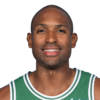
Al Horford
BOS • C • #42
RPG: 6.2
BPG: 0.85
This potential move has been widely anticipated, with reports indicating Golden State`s strong interest in acquiring Horford. The primary delay is likely financial, as the Warriors are still resolving Jonathan Kuminga`s situation and want to assess their cap flexibility before finalizing a deal with Horford. Nevertheless, the fit is seamless. Golden State requires a big man who can shoot and prefers a switch-heavy defensive scheme, an area where Horford continues to excel. Succeeding with the Warriors demands high basketball IQ, and Horford, a highly respected veteran, possesses just that. He is poised to be an excellent addition once the signing becomes official.
4. Gary Payton II: Golden State Warriors
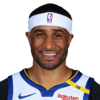
Gary Payton II
GS • PG
APG: 1.3
SPG: 0.84
Moses Moody`s limited playing time (around nine minutes per game) in the Minnesota series was notable, suggesting a waning trust from Steve Kerr towards the end of last season. Without Stephen Curry to compensate for his offensive weaknesses, Moody became nearly unplayable. The Warriors are in need of a secondary point-of-attack defender, a role Gary Payton II has consistently filled during his two previous stints with the team.
While Payton II also has offensive limitations, Golden State`s free-flowing system is uniquely equipped to mitigate these. His intelligent cutting and underrated screening abilities are far more effective in their offense compared to a traditional, pick-and-roll heavy attack that would highlight his weaker shooting (though it`s worth noting his solid 41% from corner threes last season). Other defense-focused teams will surely pursue him, but his experience in Portland demonstrated that other opportunities aren`t always superior. Both Payton II and the Warriors benefit from their partnership.
5. Malcolm Brogdon: Minnesota Timberwolves

Malcolm Brogdon
WAS • PG • #15
APG: 4.1
3P/G: 0.667
Considering the departure of Nickeil Alexander-Walker and their reported pursuit of Damian Lillard prior to his Portland return, it`s reasonable to infer that Minnesota intends to fill one of their two remaining roster spots with a guard. Given Mike Conley`s age, acquiring a traditional, floor-general point guard like Brogdon makes strategic sense as a safeguard. Anthony Edwards isn`t a true point guard, and while Rob Dillingham might be designated as one, his primary focus is scoring.
A secondary, yet significant, motive behind signing Brogdon would be to acquire a tradable salary. Tim Connelly, known for his creative deal-making (evident in his earlier attempt to trade for Kevin Durant this offseason), could potentially make Conley expendable with a free-agent addition. This would free up approximately $10.8 million in easily movable salary by the trade deadline. The long-term vision is for Dillingham and Terrence Shannon Jr. to develop into the future backcourt alongside Edwards. While Conley`s veteran presence is valuable for team chemistry, the Timberwolves would likely move him without hesitation if it meant enhancing the roster to foster the development of their young talent.
6. Jonathan Kuminga: Phoenix Suns

Jonathan Kuminga
GS • PF • #00
RPG: 4.6
APG: 2.2
Restricted free agents face a significantly tougher market than unrestricted ones, primarily because their current team retains the right to match any offer. This often deters potential suitors early on, leading to a depleted market before most restricted free agency issues are resolved. Consequently, many restricted free agents end up re-signing with their original teams on favorable terms. However, given Jonathan Kuminga`s reported desire to leave Golden State, he might consider accepting his one-year qualifying offer to become an unrestricted free agent next summer.
For now, a sign-and-trade seems plausible. These transactions are complicated by the “base-year compensation” cap rule, which means Golden State would only count approximately half of Kuminga`s new salary towards outgoing money, while his new team would count the full amount. This disparity makes salary matching challenging. Miami has shown interest, but a logical trade candidate like Andrew Wiggins is financially too large for the Warriors.
Phoenix has also reportedly expressed interest. They possess a comparable 3-and-D forward, Dillon Brooks, who ironically has a mixed history with Golden State but earns significantly less than Wiggins (around $21 million). Golden State could trade Kuminga at roughly $25 million and then move Moses Moody, who plays a similar role, to another team. This would help satisfy salary-matching requirements and free up cap space for additional roster additions. While this move would push Phoenix over the luxury tax threshold, they could then trade Nick Richards and his $5 million salary into another team`s cap space or trade exception to get back under.
From a basketball perspective, Phoenix remains a questionable fit for Kuminga. He seeks more shot opportunities, yet the Suns` roster is heavily skewed towards shooting guards. More critically, the Suns desperately need upside; they must develop one or two young players to revitalize their aging core. Kuminga offers that potential. He would need to improve his defense beyond what he showed with the Warriors and integrate into an already crowded offense, but if he succeeds, he has the potential to become a very impactful player.
7. Cam Thomas: Milwaukee Bucks

Cam Thomas
BKN • SG • #24
APG: 3.8
3P/G: 2.72
The Milwaukee Bucks, having waived Damian Lillard to secure Myles Turner (who largely fills Brook Lopez`s role), still require a guard capable of consistent 20-plus point scoring to maintain their offensive output. While they`ve re-signed Kevin Porter Jr. and Gary Trent Jr. and added Cole Anthony, these players are primarily reserves. Milwaukee needs a higher-upside acquisition. They`ve previously shown interest in Thomas, and in Milwaukee, with Giannis Antetokounmpo handling primary playmaking duties, Thomas could focus solely on his scoring.
For a potential contract, the Bucks would need to trade Kyle Kuzma to match salaries, though the Nets would likely be unwilling to acquire him. Milwaukee might sweeten the deal with an unprotected first-round pick swap in 2032. This would keep their 2031 first-rounder available for immediate trades and ensure their 2033 first-round pick is tradable next offseason. Since the Nets hold two first-round picks in 2032, the swap could be structured to apply to either. This would be a substantial cost for Milwaukee, but if they view Thomas as the elite scorer necessary to persuade Giannis Antetokounmpo to commit long-term, they might consider it a worthwhile investment.